


Chess openings
Best Chess Openings for Beginners
The nine openings to learn first
You don't need twenty openings — you need one you actually understand for each colour. These nine are worth learning first — five for White, four for Black against 1.e4. Each card shows the position, says what the opening wants and who it suits, and links to its move-by-move course.
Openings for White
You make the first move and set the plan.
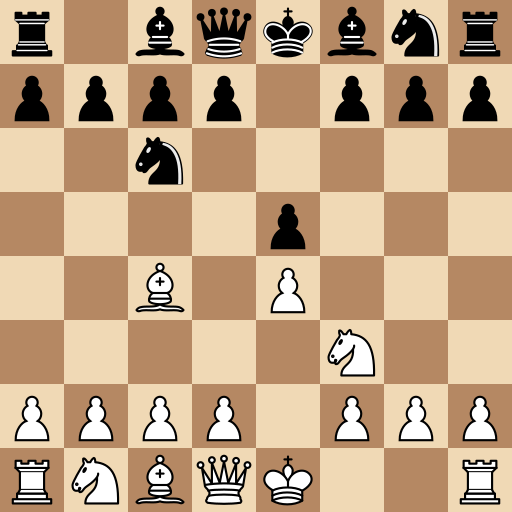
- The planBring every piece out fast and point the bishop at f7, the one square only their king defends.
- Who it suitsYour first opening. Every move has a reason you can see on the board.
- When to play itAs White, when 1.e4 is met by 1...e5 — the reply you will face most often.
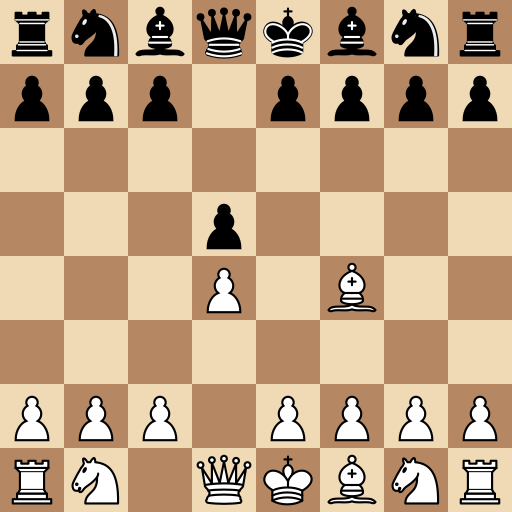
- The planBuild the same house nearly every game: bishop out to f4, pawn wall up behind it.
- Who it suitsPlayers tired of being surprised on move four. Almost nothing to memorize.
- When to play itAs White, against nearly any setup — 1.d4 first, then the same plan.
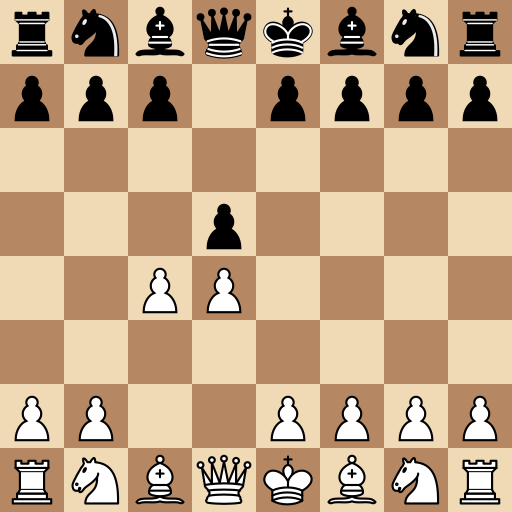
- The planOffer the c-pawn to pull their middle pawn aside. The pawn always comes back, and the middle stays yours.
- Who it suitsPlayers who like space and pawns more than quick tactics.
- When to play itAs White, when 1.d4 is met by 1...d5.
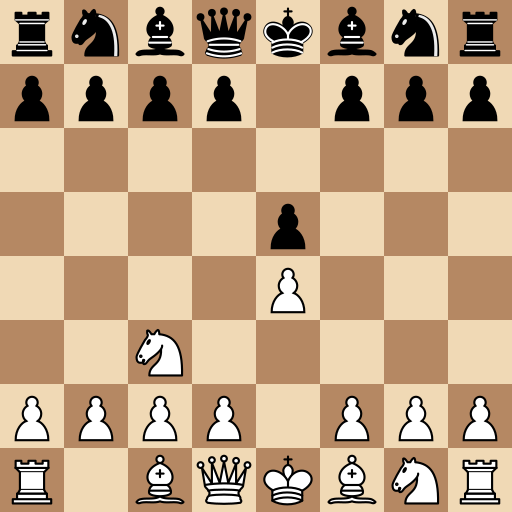
- The planGuard e4 with the knight first, then charge the f-pawn and break their middle open.
- Who it suitsPlayers who want to attack from move three.
- When to play itAs White, when 1.e4 is met by 1...e5 and you want sharper play than the Italian.
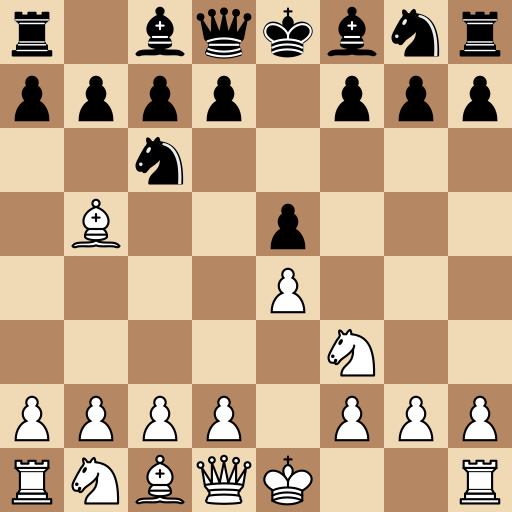
- The planLean on the knight that holds up their e5 pawn, and never let the pressure go.
- Who it suitsPlayers ready to invest in one opening that can carry them for years.
- When to play itAs White, when 1.e4 is met by 1...e5 and you have outgrown quieter setups.
Openings for Black
All four answer 1.e4 — the first move you'll face most often.
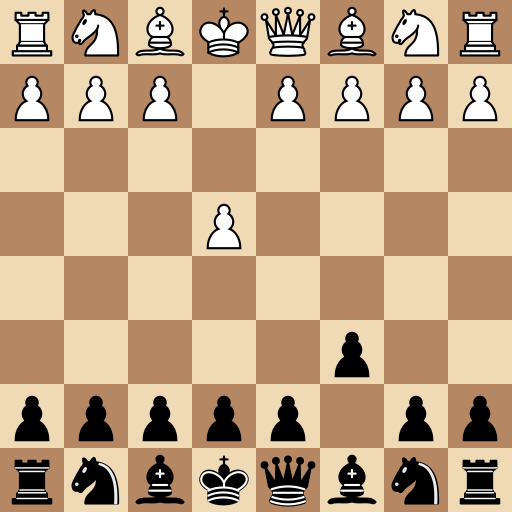
- The planAnswer 1.e4 with 1...c6, so the middle pawn 2...d5 arrives already guarded.
- Who it suitsPlayers who want a solid answer to 1.e4 without early tactics landing on their king.
- When to play itAs Black, every time White opens 1.e4 and you want the game calm.
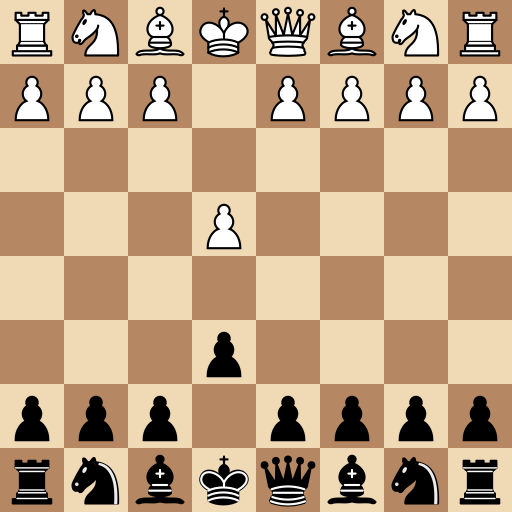
- The plan1...e6 guards d5 first; then 2...d5 strikes the middle, and the c5 break follows.
- Who it suitsPlayers who like a fixed plan: build the chain, then break it.
- When to play itAs Black against 1.e4, when you want a closed middle and a clear break to aim for.
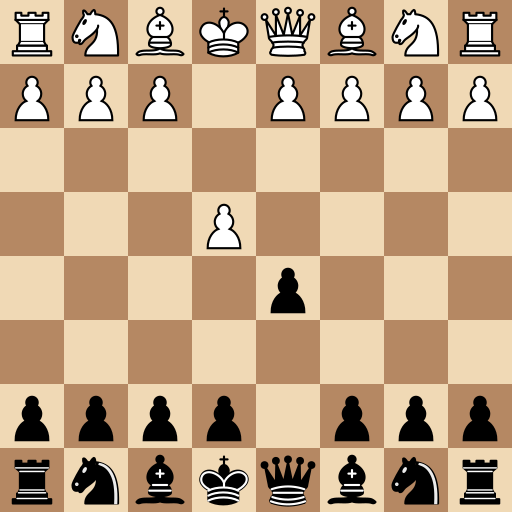
- The planAttack their first move with your first move — 1...d5 hits e4 at once, and the queen takes back herself.
- Who it suitsPlayers who want one clear plan and near-identical positions every game.
- When to play itAs Black against 1.e4, when you want the fight settled on move one.
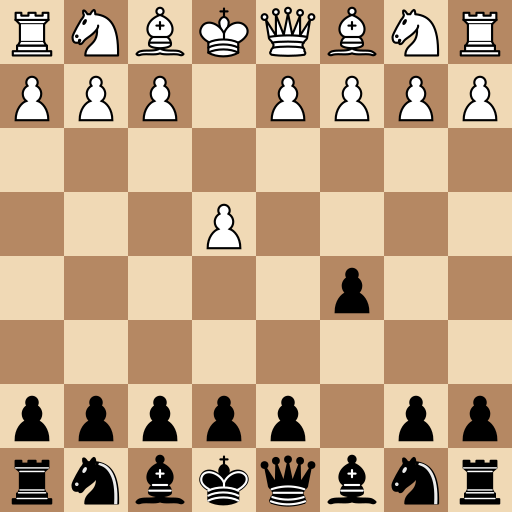
- The planFight for d4 from the side with 1...c5, so the game never turns into a mirror.
- Who it suitsPlayers who want real winning chances as Black and accept sharper play for them.
- When to play itAs Black against 1.e4, when a mirrored middle is not the game you came for.
Which one first?
Pick one for White and one answer to 1.e4 for Black. Play them in every game for a few weeks, and add another only when the first pair feels automatic. If you're not sure which pair is yours, find the line below that sounds like you.
- Brand new to openings→Italian Game
- Tired of surprises, want one setup→London System
- Like space and pawns more than quick tactics→Queen's Gambit
- Want to attack from move three→Vienna Game
- Want one opening to keep for years→Ruy Lopez
- Want a calm, solid answer to 1.e4→Caro-Kann Defense
- Like plans more than memory as Black→French Defense
- Want your answer to 1.e4 settled on move one→Scandinavian Defense
- Want to play for a win as Black→Sicilian Defense
The other 23 trainers
The nine openings above are the ones to learn first. Zapp Chess also has a move-by-move trainer for 23 more openings, listed here by the first move they follow. Each entry gives the defining moves and the colour you play, and links to its trainer.
More for White after 1.e4
- King's Gambit1.e4 e5 2.f4· You play White
- Scotch Game1.e4 e5 2.Nf3 Nc6 3.d4· You play White
More for White after 1.d4
- Catalan Opening1.d4 Nf6 2.c4 e6 3.g3 d5 4.Bg2· You play White
- Trompowsky Attack1.d4 Nf6 2.Bg5· You play White
Flank openings for White
- English Opening1.c4 e5 2.Nc3· You play White
- Réti Opening1.Nf3 d5 2.c4· You play White
- King's Indian Attack1.Nf3 d5 2.g3· You play White
- Bird's Opening1.f4· You play White
- King's Fianchetto Opening1.g3· You play White
- Nimzowitsch-Larsen Attack1.b3· You play White
- Polish Opening1.b4· You play White
- Grob Opening1.g4· You play White
More answers to 1.e4 for Black
- Pirc Defense1.e4 d6 2.d4 Nf6· You play Black
- Alekhine's Defense1.e4 Nf6· You play Black
Answers to 1.d4 for Black
- King's Indian Defense1.d4 Nf6 2.c4 g6· You play Black
- Slav Defense1.d4 d5 2.c4 c6· You play Black
- Dutch Defense1.d4 f5· You play Black
- Grünfeld Defense1.d4 Nf6 2.c4 g6 3.Nc3 d5· You play Black
- Nimzo-Indian Defense1.d4 Nf6 2.c4 e6 3.Nc3 Bb4· You play Black
- Queen's Indian Defense1.d4 Nf6 2.c4 e6 3.Nf3 b6· You play Black
- Bogo-Indian Defense1.d4 Nf6 2.c4 e6 3.Nf3 Bb4+· You play Black
- Benoni Defense1.d4 Nf6 2.c4 c5 3.d5 e6· You play Black
- Benko Gambit1.d4 Nf6 2.c4 c5 3.d5 b5· You play Black
When openings stop helping
An opening carries you about ten moves. After that the game is yours to play — and at beginner level, nearly every game is decided by a piece left hanging, not by the opening. That's why these courses spend their time on habits rather than move lists: put a pawn in the middle, bring the pieces out with a purpose, castle before attacking, and know the one trick your opening must not fall for. Those habits keep working long after move ten — they're the seven principles in Part 1 of this series.
So don't collect openings. One for each colour, learned properly and played often, beats five learned halfway. When yours feel automatic, come back for more.
Questions people ask
What is the best chess opening for a beginner?
The Italian Game, for most people. Every move has a purpose you can see on the board, so it teaches what openings are actually for. If remembering moves is your problem, the London System fits better — it is one setup, nearly every game.
How many openings should a beginner learn?
Two: one for White and one answer to 1.e4 as Black. Play both until they feel automatic — usually a few dozen games each. Learning several at once splits your practice, and none of them stick.
Do beginners need to study openings at all?
The ideas, yes; long move lists, no. Take the middle, bring your pieces out with a purpose, castle early. Those three habits are the whole point, and each course here teaches them through one concrete opening.
What is the easiest chess opening to learn?
For White, the London System — the same house nearly every game, so there is nothing to memorize past the plan itself. For Black, the Scandinavian — the whole opening is decided by your first move.
Are these openings for White or Black?
Five are for White: Italian Game, London System, Queen's Gambit, Vienna Game, Ruy Lopez. Four are for Black, and all four answer 1.e4: Caro-Kann, French, Scandinavian, Sicilian. Each course says which side you play.
What should Black play against 1.d4?
The Slav if you want it solid: answer 1.d4 with 1...d5, guard it with 2...c6, and your bishop keeps its way out. The King's Indian if you want a fight: let them build the middle, then strike it with e5. Both have full move-by-move courses on this site.
Do I have to memorize long lines?
No. Each course is a plan plus the reasons behind it, with the few replies your opponent will actually try. When you understand why each move happens, the moves remember themselves.
How long does one course take?
Ten to fifteen minutes to play through. Owning the opening takes longer — plan on using it for a few dozen real games before adding a second one.
What if my opponent plays something the course never showed?
Fall back on the plan: guard your middle pawn, bring pieces out with a job, castle. The courses teach the real replies you will meet most often, and the habits cover the rest.
I'm still learning the basics — should I start with openings?
Learn the fundamentals first: the chess rules and chess board setup, chess notation, chess piece values, special moves like castling and en passant, and the difference between stalemate and checkmate. Openings are the natural next step in how to play chess for beginners — and every course here assumes you have the basics down.
Part 3 of the best-chess-openings-for-beginners series. Every position shown here is replayed through a chess engine library at build time, so each board is legal and reachable. Each opening links to its own move-by-move course.
