One pawn to c5 fights for the middle from the side, so the game never becomes a mirror of theirs. You play the setup, both replies, and a full game against an opponent that rips the middle open.
Start here
0
Chapter 1: The Side Door
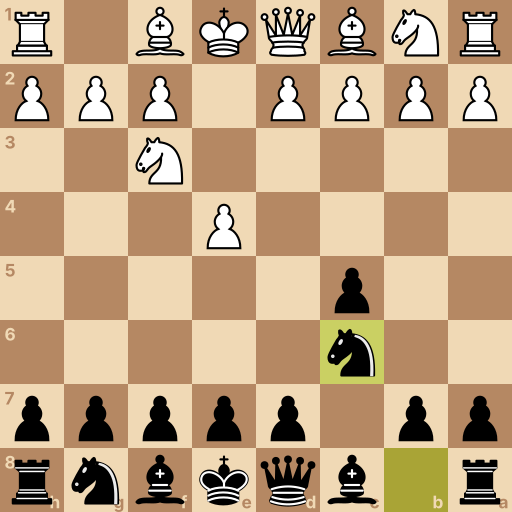
Main line: 1.e4 c5 2.Nf3 Nc6
Position after 1.e4 c5 2.Nf3 Nc6. White to move.
The four middle squares are where games are decided. Pieces posted near them reach the whole board; pieces on the rim watch from a distance.
White moves first and takes one. Most answers copy them. The Sicilian never copies anyone.
1.e4, the most common first move in chess. Mirror it with e5 and the game becomes a copy of theirs, one move behind.
The Sicilian answers from the side instead — a pawn that fights for d4 without ever standing in front of their e-pawn.
Your move: Push the pawn in front of your queenside bishop two squares, to c5. From there it fights for the d4 square — from the side, out of everyone's way.
1...c5 Not the middle pawns — the c-pawn, two steps, claiming d4 from the flank.
Your move: Their knight comes out and eyes d4 too. Match it: your queenside knight to c6 puts a second guard on that square.
2...Nc6 The knight beside your rook, one jump to c6 — it watches d4 with your pawn.
Question: Their e-pawn owns e4, and your c-pawn watches d4. What did 1...c5 actually buy you?
Answer: A grip on d4 without blocking or copying anything. Follow where the c5 pawn is looking. The pawn claims d4 while every line for your own pieces stays open. If their d-pawn ever steps forward, yours takes it.
This is the Sicilian Defense, the most played answer to 1.e4 there is.
Their main try is to push d4 anyway and open the middle. That fight — and the bishop it wakes up — comes next.
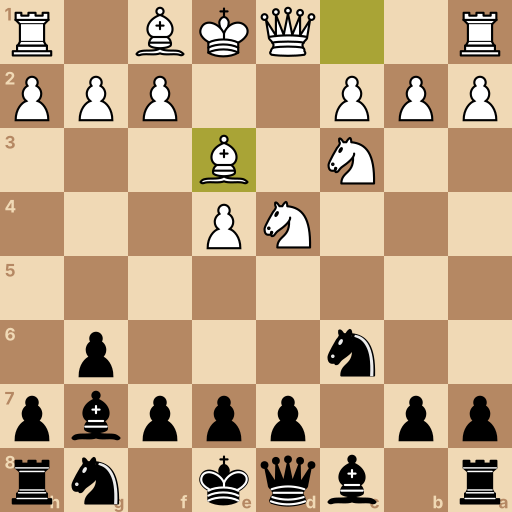
Position after 1.e4 c5 2.Nf3 Nc6 3.d4 cxd4 4.Nxd4 g6 5.Nc3 Bg7 6.Be3. Black to move.
There it is: d4, the push you were waiting for. They offer to open the middle.
Say yes. The trade that follows is the quiet heart of the Sicilian — you give a side pawn and get a middle pawn for it.
Your move: Take their d-pawn with your c-pawn.
3...cxd4 Your c5 pawn takes the pawn that just stepped into its sights.
Your move: Their knight takes back and sits in the middle. Start the long plan: one step with the g-pawn opens a home on g7 for your bishop.
4...g6 One small step with the pawn in front of your knight's corner — it opens g7.
Your move: They bring the other knight out. Now slide your bishop into its new home on g7 — it presses the longest diagonal on the board, straight through the middle.
5...Bg7 The kingside bishop, one square, into the corner home you just opened.
Question: So what is the plan in the open game?
Answer: Finish your pieces and let the g7 bishop press the middle. The bishop already does its job from home — help it, don't send it hunting. You traded a side pawn for a middle pawn, and the bishop presses from its own house. Knight out, castle, rook to the open file — that is the next chapter.
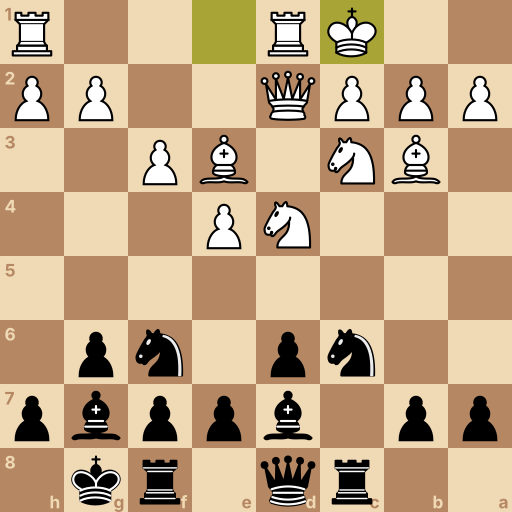
Position after 1.e4 c5 2.Nf3 Nc6 3.d4 cxd4 4.Nxd4 g6 5.Nc3 Bg7 6.Be3 Nf6 7.Bc4 O-O 8.Bb3 d6 9.f3 Bd7 10.Qd2 Rc8 11.O-O-O. Black to move.
The bishop has its diagonal. Now seats for everyone else: knight, king, the other bishop — and a rook with a file all of its own.
Look at the c-file. Your pawn left it on move two, and no pawn of yours will ever block it again.
Your move: Knight to f6 — it attacks their e4 pawn at once and clears the way for your castle.
6...Nf6 The knight in front of your rook, out to f6 — it hits e4 on arrival.
Your move: Their bishop comes out eyeing f7. Castle — your king and rook cover that square together the moment they land.
7...O-O King two squares toward the corner — the rook jumps over on its own.
Your move: They tuck the bishop back to b3. One small pawn step to d6 guards e5 and opens the door for your last bishop.
8...d6 One step with your queen's pawn — it opens the c8 bishop's door.
Your move: They build a pawn wall with f3. Bishop to d7 — a modest square, but now every minor piece is out and the back rank is clearing.
9...Bd7 The last bishop steps out to d7 — short move, full development.
Your move: Their queen joins the middle. Swing your rook to c8 — the half-open file your c-pawn left behind belongs to it now.
10...Rc8 The corner rook slides two squares to c8, onto the open road.
Question: They castled on the queenside — right into your half-open file. Where does your play come from?
Answer: Down the c-file, straight at their king. Count your pieces pointing at the queenside — then look where their king just went. Your rook, your c6 knight, and the long diagonal of the g7 bishop all press the same corner of the board — and their king walked into it. Sicilian games are won on that file.
Chapter 4: The Clamp
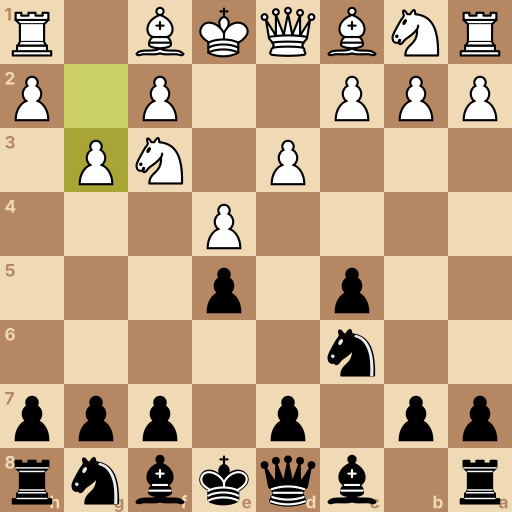
Main line: 1.e4 c5 2.d3 e5 3.Nf3 Nc6 4.g3
Position after 1.e4 c5 2.d3 e5 3.Nf3 Nc6 4.g3. Black to move.
Sometimes there is no d4 push at all — just a small pawn to d3, guarding e4 and waiting.
When they play small, take the ground they left. Your c5 pawn already watches d4; one more pawn shuts that square for good.
Your move: Push your king's pawn two squares to e5. With c5 already placed, your pawns clamp the d4 square from both sides.
2...e5 The pawn in front of your king, two steps — it meets c5 around the d4 square.
Your move: Their knight jumps out and looks at your e5 pawn. Answer with your queenside knight to c6 — pawn guarded, piece developed, one move.
3...Nc6 The knight beside your rook guards e5 from c6.
Question: What did c5 and e5 do together?
Answer: Shut their d-pawn out of the middle for good. Look at the square between your two pawns. Both pawns cover d4, so their d-pawn stays small on d3 for the rest of the game. You hold more of the middle than they do — develop behind your pawns, castle, and enjoy the extra room.
Final challenge: The Opener (800 Elo)
The opponent says: I blow the middle open on move three. Keep up if you can.
Your tasks in the game, in order:
Take the d-pawn — a side pawn for a middle pawn.
Open the home square for your bishop with g6.
Slide the bishop to g7, onto the long diagonal.
Knight to f6 — it hits e4 and readies your castle.
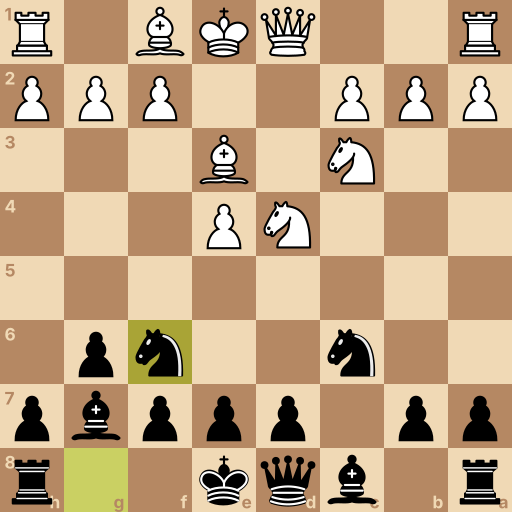
Position after 1.e4 c5 2.Nf3 Nc6 3.d4 cxd4 4.Nxd4 g6 5.Nc3 Bg7 6.Be3 Nf6. White to move.
History of the Sicilian Defense
The Sicilian Defense begins with 1.e4 c5 and occupies ECO codes B20 through B99. Its name comes from Sicily, where the defense was recorded by Giulio Polerio in the late sixteenth century. It became established in tournament play during the nineteenth century and grew into one of the main defenses to 1.e4 during the twentieth century.
Main ideas for Black
Black's c5 pawn contests d4 without mirroring White's e-pawn and leaves both central pawns free to move. After 2.Nf3 Nc6 3.d4 cxd4 4.Nxd4, g6 and Bg7 place the dark-squared bishop on the a1-h8 diagonal, while Nf6 attacks e4. White usually develops quickly, supports the center, and may castle queenside. Black completes development, castles kingside, and uses the half-open c-file against White's queenside.
Typical plans
In the Open Sicilian, exchanging the c-pawn for White's d-pawn leaves Black with the half-open c-file and two central pawns against White's e-pawn. Black often places a rook on c8, keeps the g7 bishop on its diagonal, and prepares d5 or b5 when supported. White commonly seeks kingside activity and may castle queenside, creating attacks on opposite wings. Against a quieter d3 setup, e5 can clamp d4 before Black develops behind the pawn chain.
Common mistakes
Do not delay kingside development while collecting queenside pawns; play Nf6, Bg7, and O-O before starting operations on the c-file.
Declining White's d4 push without a reason gives up the c-pawn's main exchange; play cxd4 and make White recapture with a piece.
Playing e5 automatically in every Sicilian can weaken d5; reserve the clamp for quiet d3 systems or positions where e5 is supported.
Related openings
Caro-Kann Defense1.e4 c6. Answer 1.e4 with a middle pawn that arrives guarded.
French Defense1.e4 e6. One pawn guards, the next one strikes the middle.