


Chess rules
Chess Board Setup
Every piece on the right square, in seven steps
The correct chess board setup takes under a minute once you know the two rules people forget: a light square in the right-hand corner, and each queen on her own color. Here is every step, with a diagram for each.
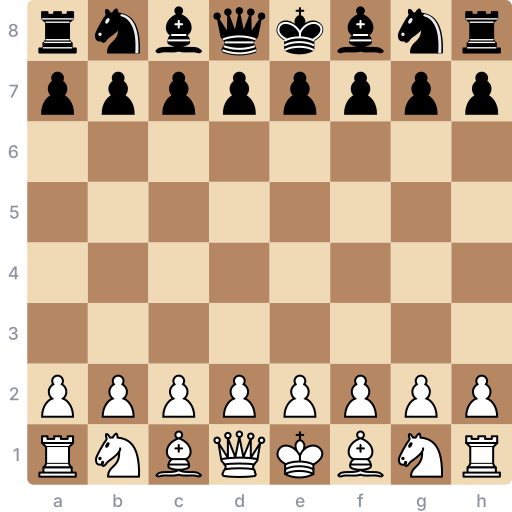
This is the position you're building: sixteen pieces per player (eight pawns, two rooks, two knights, two bishops, a queen and a king) filling the first two rows on each side. Both armies mirror each other, with one difference: the white queen stands on a light square, the black queen on a dark square. Work through the seven steps below in order and the board will be right every time, whether it's a wooden set on a table or a diagram you're reading.
Step 1: Light square in the right corner
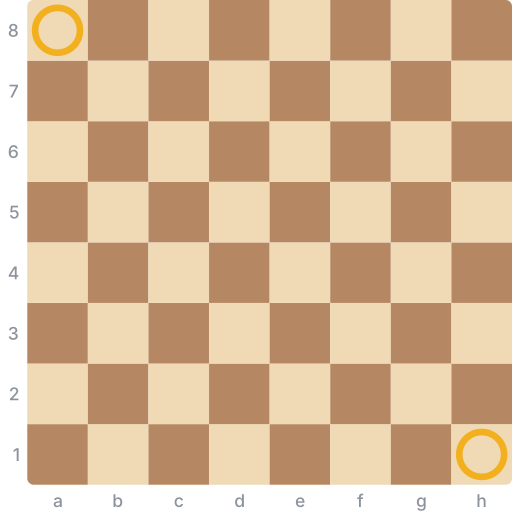
Before any piece touches the board, turn the board itself the right way: each player must have a light square in the corner on their right-hand side. The phrase to remember is "light on the right". If the right-hand corner square is dark, rotate the board a quarter turn. This is the single most common setup mistake. Every other step depends on it, because it decides which squares the queens will stand on.
Step 2: Pawns across the second row
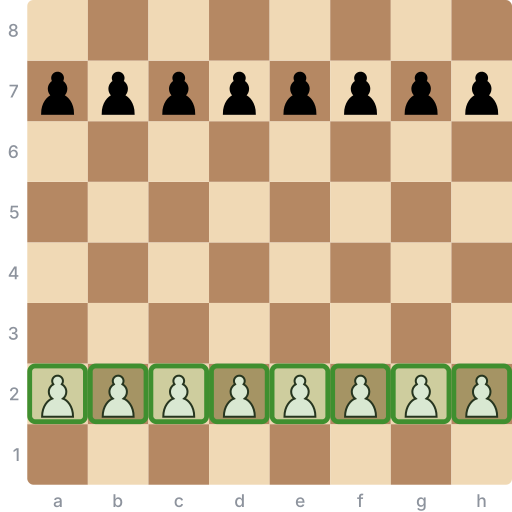
Place all eight pawns along your second row, one per square, edge to edge. They form the wall in front of everything else, so setting them first keeps the back row clear to fill in order. Black does the same on their side, on the row second from their edge.
Step 3: Rooks in the corners
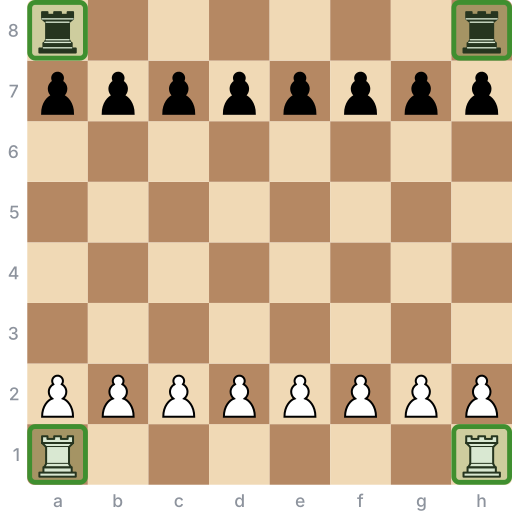
The back row fills from the outside in, and the rooks, the castle-shaped pieces, go first, one in each corner. Simple to remember: the towers stand at the edges of the fortress.
Step 4: Knights beside the rooks
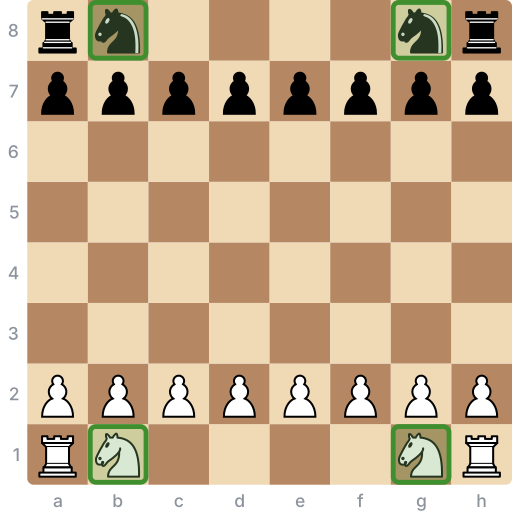
The horses go directly next to the rooks, one on each side.
Step 5: Bishops beside the knights
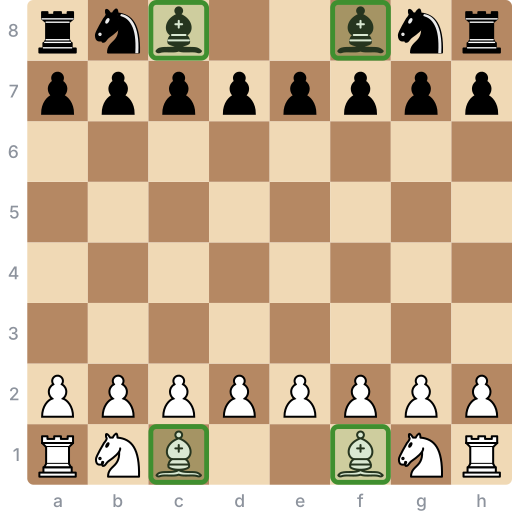
The bishops, the tall pieces with the mitred, slotted tops, go next to the knights. That completes both wings and leaves exactly two empty squares in the middle of each back row, one light and one dark, for the queen and king.
Step 6: The queen on her own color
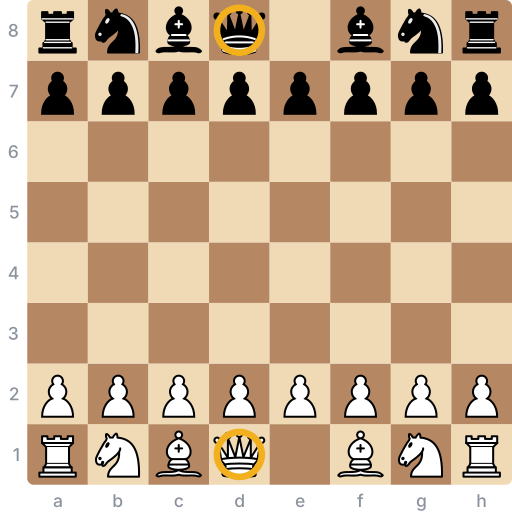
The queen always starts on her own color: the white queen on d1, which is a light square, and the black queen on d8, which is dark. "Queen on her color": if you got step 1 right, there is exactly one square of her color available to her, so this step checks itself. Both queens end up facing each other across the d-file.
Step 7: The king takes the last square
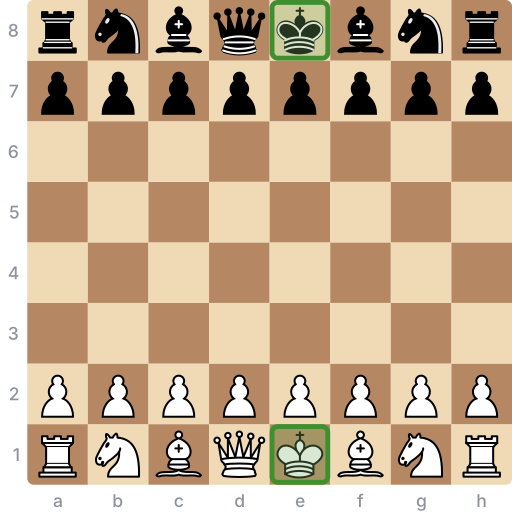
One square remains on each back row, and the king takes it: e1 for White, e8 for Black, each on the opposite color to his own. The kings face each other down the e-file, the queens down the d-file, and the setup is done. White makes the first move, and the players alternate from there.
The three mistakes to check for
- 1.Board rotated a quarter turn, leaving a dark square in each right-hand corner. Everything else will look plausible and be wrong.
- 2.King and queen swapped. Check the queens: white queen on a light square, black queen on a dark one, facing each other on the same file.
- 3.Knights and bishops swapped. The horse stands next to the rook; the mitred piece stands next to the queen and king.
On a physical set the whole routine takes about thirty seconds; online the board is set up for you, which is one less thing to think about while you're learning the rules of the game themselves.
Square names in 30 seconds
You may have noticed the names this page uses: d1, e8, h1. Every square has one. The columns, called files, are lettered a to h starting from White's left; the rows, called ranks, are numbered 1 to 8 starting from White's side. A square's name is its file letter plus its rank number: the white queen starts on d1, the black king on e8. You don't need notation to set up a board, but it's how every book, article and app talks about chess, and now you can read it — the rest of the system is in the chess notation guide.
Setup questions
Does the white square go on the right or the left?
The right. Each player should have a light square in the corner on their right-hand side; "light on the right" is the phrase to remember. If it's dark, rotate the board a quarter turn.
Where does the queen go when setting up a chess board?
On her own color. The white queen starts on d1, a light square; the black queen starts on d8, a dark square. The king takes the remaining centre square next to her.
Which color moves first in chess?
White always moves first. After that the players alternate, one move each, for the whole game.
How many pieces does each player start with?
Sixteen: eight pawns, two rooks, two knights, two bishops, one queen and one king. That makes thirty-two pieces on the board in total, filling the first two ranks on each side.
What do the letters and numbers on a chessboard mean?
They name the squares. The columns (files) are lettered a to h from White's left, and the rows (ranks) are numbered 1 to 8 from White's side, so every square has a name like e4: file e, rank 4.
The board is ready. Next, learn what the pieces actually do: how to play chess for beginners, step by step.
This page in other languages: தமிழ் · हिन्दी · Hinglish · বাংলা · मराठी · Deutsch · Tiếng Việt · Polski · Bahasa Indonesia · Русский · ไทย · Italiano · Français · Türkçe · Español · Português · العربية
