


Chess rules
Stalemate vs Checkmate
How the two endings differ
Both end the game on the spot, and in both the player to move has no legal move. The whole difference is one detail: is the king in check? If yes, it's checkmate and the attacker wins. If no, it's stalemate and the game is a draw — even if the trapped side has nothing left but the king.
The difference in one look
Checkmate: the king is attacked, and there is no move that saves it. The game ends immediately and the attacking side wins. Stalemate: the player to move has no legal move at all, but their king is not attacked. The game also ends immediately — as a draw, half a point each.
What checkmate is
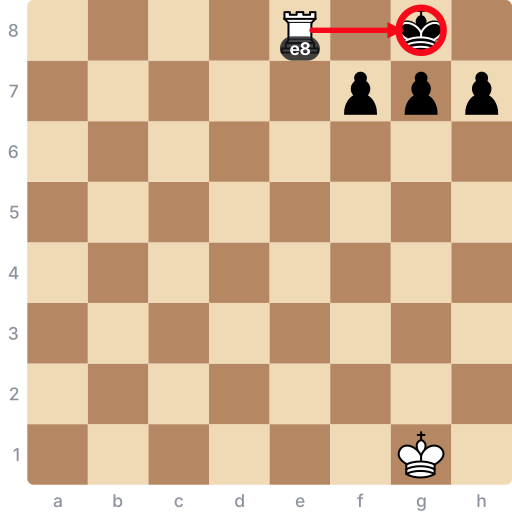
Check means the king is attacked, and the rules demand an immediate answer: move the king to a safe square, block the attack, or capture the attacker. Checkmate is check with all three answers impossible. In the diagram, the rook on e8 gives check along the back rank; the king's own pawns seal g7 and h7, nothing can block or capture, and the game is over. The king is never actually taken — the inescapable trap itself is the win. The shapes that deliver it most often are in the checkmate guide, with thirteen named mating patterns.
What stalemate is
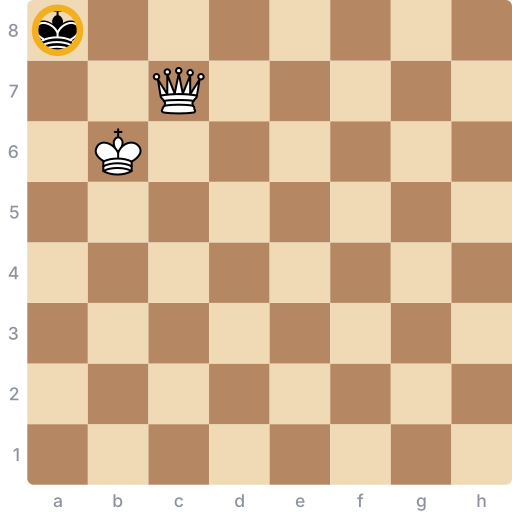
Now remove the check. In the diagram, Black's king on a8 is not attacked — but b8, b7 and a7 all are, and Black has no other piece to move. Black, to move, has no legal move. That is stalemate, and the game is drawn on the spot. It doesn't matter that White has an extra queen and was one move from winning; the half point is final. Note the fine print: stalemate requires the player to move to be stuck, and counts every piece — if that trapped king had a spare pawn with a legal step, there'd be no stalemate, and the pawn would have to move.
Why stalemate is a draw and not a win
Because chess requires you to make a legal move on your turn, and forbids you from moving your king into check. A stalemated player has been left with no way to obey both rules, through no illegal act of their own — the game simply cannot continue, and a game that cannot continue without a checkmate on the board is drawn. Older versions of chess scored it differently (a win, a half-win, even a loss for the stalemating side, depending on the century and the country), but the draw has been standard since the 1800s, and it changes endgame results: king and pawn against king is a draw in many positions only because the defender can aim for stalemate, which means the stronger side has to win with precision instead of a head count.
How to avoid stalemating your opponent
Stalemate accidents happen to the winning side, almost always with a huge material lead, and almost always in one of two shapes: the enemy king cornered by a queen standing one square too close, or a lone king smothered while you promote your third queen. Three habits prevent nearly all of them:
- 1.Before any quiet move in a winning endgame, find your opponent's reply. If you can't name one, you may be about to stalemate them.
- 2.Leave the enemy king one free square until the move that delivers mate.
- 3.When in doubt, check: a king in check is never stalemated, so checking moves are stalemate-proof by definition.
And from the other chair: if you're the one hopelessly behind, a stalemate trap is a completely legitimate way to save half a point. Corner your own king, shed your movable pieces, and wait for the move that covers your last free square without giving check.
Mate, don't stalemate
The classic queen-and-king finish, below. Two natural queen moves: one wins, one draws.
One queen move is checkmate. Another, one square short, is stalemate and a draw. Find the mate.
Tap a piece, then tap where it should go.
Stalemate and checkmate questions
Who wins in a stalemate?
Nobody. Stalemate is a draw: the game ends immediately with half a point each, no matter how much material either side has. A player with a lone king can draw against a king, queen and three rooks this way.
What is the difference between stalemate and checkmate?
In both, the player to move has no legal move. The difference is the king: in checkmate it is under attack, in stalemate it is not. Checkmate wins the game for the attacker; stalemate is a draw.
Why is stalemate a draw and not a win?
Because the rules require you to make a legal move on your turn, and stalemate is the situation where none exists. The trapped side hasn't been beaten — their king is not even in check — so the game simply cannot continue, and positions that cannot continue without a mate are drawn. The rule has been standard since the 1800s and makes king and pawn against king a draw in many positions, because the defender can aim for stalemate.
How do I avoid stalemating my opponent?
When you are far ahead, check the enemy king's squares before every quiet move: if it is not in check, it must have somewhere to go. Leave it one free square until the move that actually delivers mate, and prefer checks — a king in check is never stalemated.
Is stalemate the only way a chess game is drawn?
No, it is one of five: stalemate, agreement, threefold repetition, the fifty-move rule, and insufficient material. Stalemate is the one that turns a lost position into a draw: the side with only a king gets half a point.
Keep going: chess rules, including all five draw rules, chess piece values, why material isn't the score and how to play chess for beginners.
This page in other languages: தமிழ் · हिन्दी · Hinglish · বাংলা · मराठी · Deutsch · Tiếng Việt · Polski · Bahasa Indonesia · Русский · ไทย · Italiano · Français · Türkçe · Español · Português · العربية
