


Learn chess
Chess Strategies for Beginners
Five plans for your first games
Fight for the centre, develop every piece once and castle, stop giving pieces away, improve your worst-placed piece, and trade down when you are ahead. That is the whole list. Each plan below comes with the exact habit to build, a board that shows it, and at the end a position where you catch the mistake yourself.
Strategy vs tactics, in one paragraph
A strategy is a standing plan that lasts many moves: control the centre, castle, activate pieces. A tactic is a two- or three-move sequence that wins material right now: a fork, a pin, a skewer. You need five standing plans and one checking habit; the tactics start appearing on their own once your pieces stand on good squares. If you are still learning how the pieces move, read how to play chess for beginners first and come back.
1. Fight for the centre
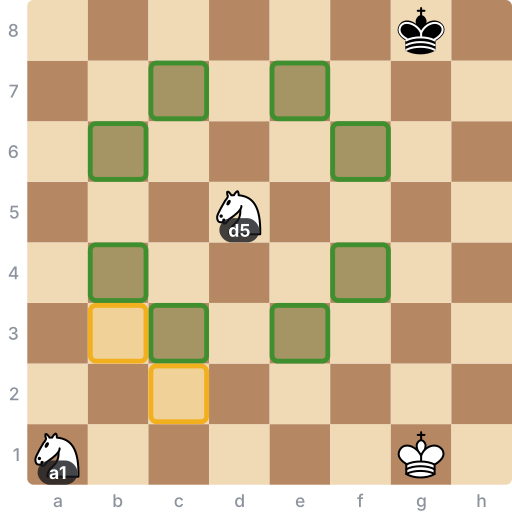
The four middle squares, e4, d4, e5 and d5, are the high ground of the board. A piece placed on or near them simply reaches more squares than it can from anywhere else. The board alongside shows the same knight twice: from d5 it attacks eight squares, from the corner on a1 it attacks two. Every piece gains the same way, which is why both players spend the first moves fighting over the same small patch of board.
In practice the plan is short: open with a centre pawn, 1.e4 or 1.d4, and when you can choose between a move towards the middle and a move towards the edge, pick the middle unless you can name a concrete reason not to. The knight belongs on f3 or c3, almost never on h3 or a3. A knight on the edge attacks at most four squares, and only two from a corner; on a central square it attacks eight. The board above shows the two extremes, d5 and a1.
2. Develop every piece once, then castle
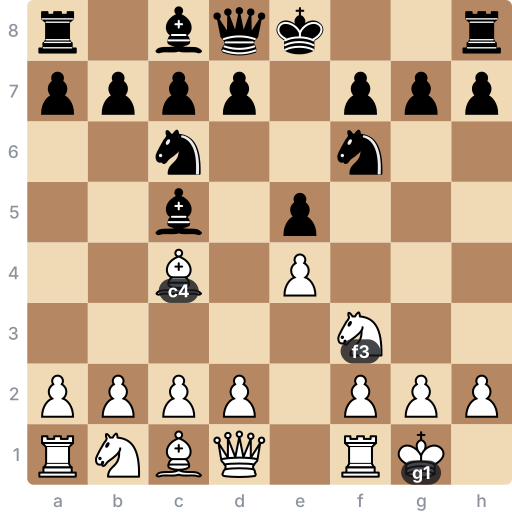
Development means each piece leaves its starting square for a useful one: knights toward the centre, bishops onto open diagonals, then the king castled behind its pawns and the rooks connected. The habit that matters is one move per piece. Moving the same knight four times in the opening spends four turns on one piece while the rest of your army sleeps on the back rank, and games are lost exactly that way. A setup opening such as the London System puts the same pieces on the same squares in almost every game, which makes one-move-per-piece development easy to keep.
Two traps live inside this plan. The first is the early queen raid: bringing the queen out on move two or three to hunt pawns. She gets chased around by your opponent's developing moves, they gain a tempo with every attack, and by move ten you have one piece out to their five. The second trap is delaying castling because nothing bad has happened yet. Castle by move ten anyway; the games you lose with a king stuck on e1 are the ones where "nothing bad" was one move away. The full version of these rules is in the seven opening principles.
3. Stop giving pieces away
Most beginner games, and a good share of club games, are decided by a piece left where it could be taken for nothing. Not by deep plans. So the highest-value strategy you can adopt is a scan you run on every single move, in three parts, always in the same order. After your opponent moves, ask what their move just changed:
- 1.Checks: does their piece now attack your king, and could one of their pieces give a check next move?
- 2.Captures: what can they take right now, and is everything of yours that stands attacked also defended?
- 3.Threats: what does their move prepare, and what will they play if you do nothing?
Then, before you release your own move, one more question: after this move of mine, which of my pieces has no defender? That is the entire routine. It costs ten seconds per move in your first games and about two once it becomes automatic. The piece values tell you which trades are acceptable when a capture appears; the scan tells you whether a capture is on the table at all.
4. No idea what to do? Improve your worst piece
Some positions offer no capture, no threat, no obvious plan. Beginners drift in those moments and push a random pawn, and every pawn move loosens something permanently, because pawns never move back. The habit that replaces drifting: find your worst-placed piece and give it a better square. The rook still standing in the corner, the bishop staring at the back of its own pawns, the knight on the rim. Move it to a square where it attacks more squares: a knight from a3 to c4, or a rook from a1 to an open file.
5. Ahead in material, trade pieces
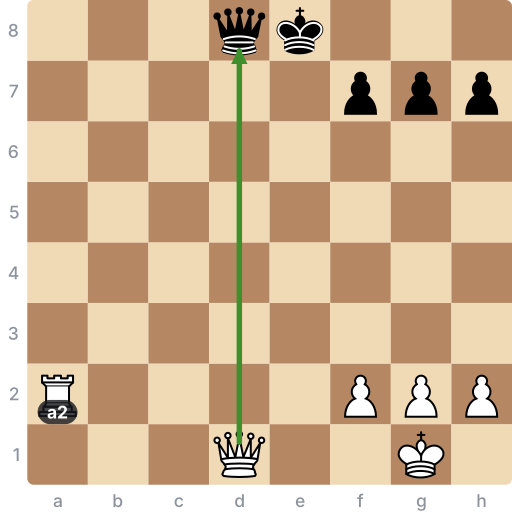
When you are ahead in material, trade pieces, not pawns. Every pair of pieces that leaves the board makes your extra material a bigger share of what remains, and fewer enemy pieces means fewer tricks against you. A queen up with heavy pieces still on can be lost to one swindle; a rook up in a plain endgame plays itself. The board shows the standard picture: White is a full rook ahead and offers the queen trade with Qxd8. Black must recapture, and the rook marches to the seventh rank and starts collecting pawns.
The mirror rule follows: when you are behind, keep pieces on and trade pawns instead. Fewer pieces make the extra material count for more, and a board with no pawns left can never make a new queen.
Spot the loose piece
White to move. Run the plan-three scan from above on the position below and it hands you the answer.
Run the scan before you move: checks, captures, threats. One black piece has no defender. Find White's move.
Tap a piece, then tap where it should go.
How to practise the five plans
Apply one habit per game: game one, castle by move ten; game two, check every capture before you take. Play at a pace where the scan fits: while it is new, pick time controls long enough to run it on every move, for example a 10-minute game. Afterwards, put one game a week into the free analysis board and look at exactly one thing: the moment you or your opponent left a piece undefended. One reviewed game teaches more than five played and forgotten; how to analyze chess games gives the five-step method and explains the numbers the board shows you.
For volume, quick games do the job: Zapp Chess games begin at a curated middlegame position with the armies already developed, and the winner is the first to go two points of material ahead. Every game is pure plan three and plan five, captures, threats and trading decisions, several times over in the time a single long game takes. India produced a five-time world champion in Anand and, in Gukesh, the youngest world champion the game has had. Where they and the rest of the elite stand today is on the best chess players in the world.
Beginner strategy questions
Should I learn openings or strategy first?
Strategy first. The five plans on this page cover your first ten moves better than a memorised line does, because they keep working after your opponent leaves the book on move two. Add one proper opening later, once you have stopped losing pieces for free.
What is the best chess strategy for a beginner?
Play for the centre and develop every piece once before you attack. If you want a single habit instead of a plan: before each of your moves, check which of your pieces would be left undefended. That habit alone wins more beginner games than anything else on this page.
How do I stop losing pieces for free?
Run the same scan after every move your opponent makes: what does it check, what can it capture, what is it threatening for next turn. Then, before your own move, ask which of your pieces it leaves undefended. Do it without exception for a week of games and the free-piece losses drop sharply.
What is the best first move in chess?
1.e4 is the classic recommendation: it claims a centre square and opens lines for the queen and a bishop. 1.d4 is every bit as sound. What matters is the idea, a centre pawn backed by quick development, more than the letter.
Do these strategies work in fast games?
Yes, and fast games are where they matter most. In a three-minute game nobody calculates everything, so the player with the better habits, centre, development, nothing hanging, usually collects the point.
Keep going: the best chess openings for beginners and chess piece values, what every trade is worth. When you are choosing where to play online, our Lichess vs Chess.com comparison covers price, ratings and free-tier limits.
