


Play chess
Pass and Play Chess
How to play two-player chess on one phone
Pass and play is two players taking turns on one phone. Install the Zapp Chess app for iPhone or Android and start a game from the Friends tab. The board never flips: Black's pieces are drawn upside down so the person opposite sees them the right way up, and only legal moves get through. This page gives the six steps to start a game, why the board stays still, when one phone beats online play, and six house rules for two players on one screen.
The no-flip layout: White at the bottom, Black upside down
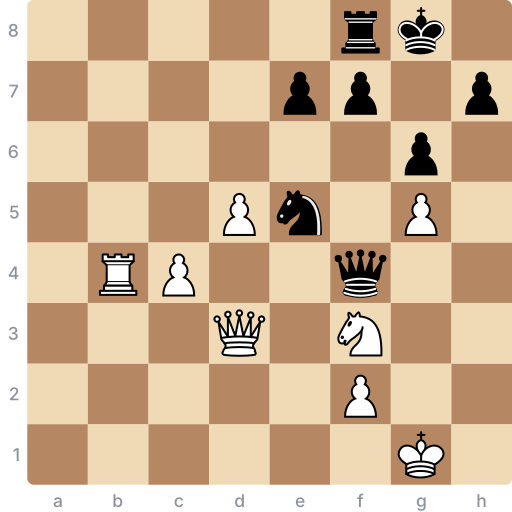
The board below shows the layout Zapp Chess pass and play uses: White plays from the bottom edge and Black's pieces are drawn upside down, so the phone lies flat between the two players and nobody turns it. It accepts only legal moves and shows whose turn it is, and the result, at both edges of the board; it has no clocks and no material rule. Undo move takes back the last move, New game resets the pieces, Fullscreen fills the screen and Exit brings the page back. The clocked game with the material rule is in the Zapp Chess app; the steps to start it follow.
White to move
What pass and play is
Pass and play is two players on one phone or tablet, taking turns on the same screen. You make your move, the other person makes theirs, and the phone does the jobs a wooden set cannot: it refuses illegal moves, keeps both clocks, and calls the result. The reason people search for it is that most apps bury the mode inside the single-player game setup, where both sides have to be switched to human, and once the game starts the board spins round after every move so the second player has to grab the phone and turn it. Below: the six steps to start a two-player game in Zapp Chess, why the board stays still with Black's pieces printed upside down, the four situations where one phone beats online play, and the house rules to agree before the first move.
How to play chess with a friend on one phone, step by step
These steps use Zapp Chess, which is free. The same idea works in any app with a local two-player mode; the difference is how many taps it takes to find it and what the board does afterwards.
- 1.Install Zapp Chess for iPhone or Android. Sign in. One account is enough; the second player never signs up for anything.
- 2.Open the Friends tab on the bottom bar and tap Start Now on the Pass & Play card.
- 3.Lay the phone flat on the table between you. White plays from the bottom edge and is labelled You; Black gets a name for the game. Black's pieces, name, clock and score are printed upside down, so the person sitting opposite reads them the right way up.
- 4.Tap Start Game. Both clocks are set: three minutes each, with a 30-second cushion before each side's first move so nobody loses time while getting comfortable.
- 5.Play. Whoever's turn it is drags the piece; the board accepts only legal moves and hands the turn across. There is no flip button to press and no need to pass the phone.
- 6.The game ends on checkmate, on a clock running out, or when one side goes two or more points of material ahead and keeps the lead through a quiet move. Tap Play Again for a fresh position, or Exit to go back to the Friends screen.
One thing to know before you start: a Zapp Chess game does not begin at the normal starting position. It opens in a real middlegame with the pieces already developed, like the board alongside, and it is usually decided within a few moves each. That makes a pass and play session a run of short, sharp games rather than one long one, which suits a phone on a table and two people with somewhere to be. If you want the full game from move one, the other options further down this page do that.
Why the board never flips
The complaint in nearly every "two players, one phone" thread is the same: the board rotates after each move, so every turn starts with someone spinning the phone or squinting at pieces that face the wrong way. The fix that most apps offer is a "no flip" setting, which stops the rotation but leaves both armies facing one player. The person opposite spends the whole game reading the board upside down.
Zapp Chess pass and play takes the other approach, the one a real table gives you for free. The board stays fixed with White at the bottom, and everything that belongs to Black is turned through 180 degrees: the pieces, the name, the clock, the material score. Each player looks down at their own side the way they would at a wooden set, and the only thing that moves between turns is a piece. Set the phone down once and leave it there.
When one phone beats online play
Online chess is the better tool when your opponent is somewhere else. When they are across the table, pass and play wins in four common situations.
- 1.Only one of you has a phone, a charged battery, or a signal. Two-device play needs two working devices and an account each; pass and play needs one of each.
- 2.Teaching a child or a friend. Sit on the same side of the phone, talk through the position, and let them make the move themselves. The board rejects illegal moves for you, so you can spend the lesson on ideas instead of rules. Start with how to play chess for beginners if the pieces are new to them, and treat the three-minute clock as a nudge, not a verdict: when it runs out, tap Play Again and carry on.
- 3.A queue, a waiting room, a lunch break, a train with a patchy connection. A Zapp Chess game uses the connection to load and to fetch the starting position, and falls back to a built-in opening position if that fetch fails; once the game is on the screen, every move is handled on the phone.
- 4.You want the game to be about the two of you. No matchmaking, no rating at stake, no stranger on the other end. A pass and play game is not rated and does not count toward anyone's record.
The exception is a flight with no wifi. Zapp Chess is an online app, so a plane is a job for a magnetic travel set or an app that installs its own offline two-player board.
House rules for two players on one screen
Agree these six rules before the first game: who plays White, touch-move, the clock, the material rule, resigning and draws, and hands off during the other player's turn.
- 1.Who plays White. In Zapp Chess White is always the side labelled You at the bottom edge, so swap seats between games and both of you get the first move in turn. The club habit is just as good: the loser of the last game takes White in the next one.
- 2.Touch move, translated for a screen. The tournament rule is that a touched piece must move (the full wording is in the chess rules). On a phone the fair version is: a piece you pick up and put back on its own square is free, a piece you drop on a legal square is played. The app has no take-back button, so a slip is a move; the board on this page has an Undo move button, so agree before the game whether it may be used. Dragging slowly is the whole technique.
- 3.Clocks. Each side has three minutes and running out loses, exactly as it would in a club. Decide in advance whether that counts with a beginner across the table; many people play the first few games as if the clock were a suggestion and switch it on for real once both players are comfortable.
- 4.The material rule. A Zapp Chess game ends when one side is two points ahead after a quiet move, using the standard piece values: a pawn is one, a knight or bishop three, a rook five, the queen nine. Winning a pawn is not enough; winning a knight for nothing usually is. Make sure both players know this before the first capture, or the sudden end feels like a bug.
- 5.Resigning and draws. Resign is on the board for the side to move. The app calls stalemate, repetition and insufficient material as draws by itself; a draw by agreement is a handshake and the Exit button.
- 6.Hands off during the other turn. No pointing at squares, no "are you sure", no picking the phone up to look closer. The person to move owns the screen until they let go of the piece.
Other ways to play two-player chess on one device
Most big chess apps have a same-device mode, usually inside the single-player game setup: set both sides to human, and look for a "no flip" or "board rotates" switch in the game menu before you start. On a laptop, the same apps rarely offer pass and play at all; the usual workaround is an analysis board with the engine and hints switched off, which gives you a legal-move board and no clock. Plain web boards exist too, and most of them stop at legal moves: no clocks, no draw rules beyond stalemate, and a layout built for a mouse rather than a phone on a table.
Pass and play questions
Can two people play chess on one phone?
Yes. In the Zapp Chess app, sign in, open the Friends tab, tap Start Now on the Pass & Play card, lay the phone flat between you and tap Start Game. Whoever's turn it is moves; the board accepts legal moves only and keeps a three-minute clock for each side.
Does the other player need an account?
No. One signed-in account starts the game. White is labelled You and plays from the bottom edge; the second player gets a name for the game, plays Black, and never signs up. The game is not rated and does not count toward anyone's record.
Does the board flip after every move?
No. The board stays fixed with White at the bottom, and Black's pieces, name, clock and score are drawn upside down so the person sitting opposite reads them the right way up. Nobody turns the phone and nobody passes it.
Does it work without internet?
Plan on a connection. Zapp Chess is an online app: it signs you in and fetches a middlegame position for each game over the network, with a built-in opening position as the fallback if that fetch fails. Once a game is on the screen, the moves are handled on the phone. For a flight with no wifi, a travel set or an app with its own offline two-player board is the right tool.
How long does a pass and play game take?
A few minutes. Each side has three minutes on the clock, the game opens in a middlegame rather than at move one, and it ends on checkmate, on time, or when one side is two or more points of material ahead after a quiet move. Most games are decided within a few moves each, so a session is a run of short games.
Keep going: how to play chess for beginners, every rule in seven steps, chess rules and chess strategies for beginners.